GPT-5.6 production model selection: a migration brief for engineering teams
GPT-5.6 adds three production tiers, but the release announcement is a starting point for workload testing, not proof that one tier fits every system.
Continue your research in ToolVerse.
Open ToolVerse for evidence, pricing context, alternatives, and current review status. Every link below navigates to the external ToolVerse directory.
Explore AI productivity tools Open on ToolVerse · externalGPT-5.6 production model selection: a migration brief
Quick answer
OpenAI made the GPT-5.6 family generally available on July 9, 2026, with three API tiers: Sol, Terra, and Luna. That expands the routing choices available to production teams, but it does not eliminate the need for workload evaluation. Sol is positioned for frontier capability, Terra for a balance of intelligence and cost, and Luna for cost-sensitive, high-volume work. The production decision should be based on accepted-result quality, latency, token use, safeguard behavior, and operating cost on the team’s own tasks.
Do not replace a stable model everywhere because a newer family is available. Freeze a representative replay set, test the current model and at least two GPT-5.6 tiers, preserve the same reasoning setting for the first comparison, and move traffic only after the candidate clears explicit gates. This article summarizes official release, model, and pricing material; it does not claim independent hands-on results.
What happened
OpenAI’s July 9 announcement describes GPT-5.6 as a generally available family spanning GPT-5.6 Sol, GPT-5.6 Terra, and GPT-5.6 Luna. The announcement says developers can access all three through the OpenAI API. The current model catalog identifies gpt-5.6-sol as the flagship option, gpt-5.6-terra as the balanced option, and gpt-5.6-luna as the cost-sensitive option. The gpt-5.6 alias routes to Sol.
The documentation also makes model selection more explicit than a single “latest model” choice. Each tier supports multiple reasoning-effort settings, and the current catalog lists text and image input, text output, a 1.05 million-token context window, and up to 128,000 output tokens for the family. Those published limits define what can be tested; they do not prove that a maximum-size request will meet a specific latency or cost target.
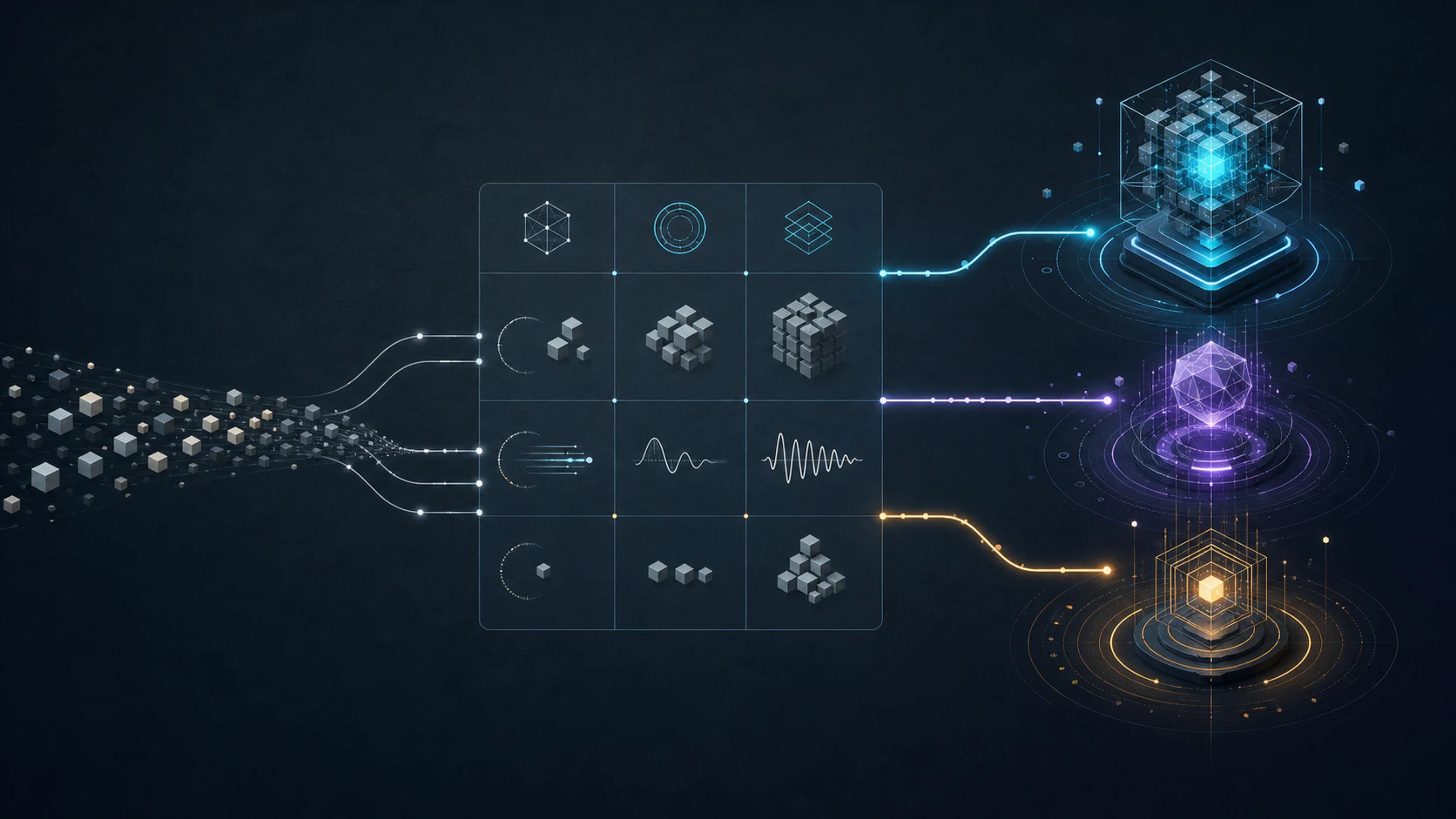
The release matters because a team can now route work within one model generation. A capability-first workflow can start with Sol, a balanced interactive workflow can evaluate Terra, and a repetitive or high-volume path can test Luna. That is an architectural option, not an automatic recommendation to deploy three models.
Confirmed details
The official pricing page lists standard short-context prices per one million tokens. At the July 29 check, Sol was $5 for input, $0.50 for cached input, and $30 for output; Terra was $2.50, $0.25, and $15; Luna was $1, $0.10, and $6. The page separately lists cache-write charges and higher long-context rates. Batch, Flex, Priority processing, data residency, and tool calls can also change the effective bill, so a base token rate is only one cost input.
Use these dimensions for the first production comparison:
| Dimension | What to measure | Decision use |
|---|---|---|
| Task acceptance | Rubric pass rate and critical failures on frozen examples | Establish whether a lower-cost tier is actually sufficient |
| Latency | Median, p95, and timeout or retry rate | Protect interactive and time-bound workflows |
| Token use | Input, cached input, cache writes, reasoning, and output | Convert published rates into workload cost |
| Tool behavior | Valid calls, recovered errors, duplicate side effects, and completion evidence | Test the whole workflow rather than prose quality alone |
| Safeguards | Refusals, delayed responses, and legitimate tasks interrupted | Identify operational impact in sensitive domains |
| Review effort | Reviewer minutes, edits, escalations, and rejected runs | Calculate cost per accepted result |
OpenAI’s model guidance recommends that migrations from GPT-5.5 or GPT-5.4 begin at the current reasoning setting, then compare the same setting and one level lower. That is a useful controlled starting point because changing the model, prompt, and effort simultaneously makes the result difficult to interpret. After the matched comparison, tune effort only where measured quality justifies the added time and tokens.
A practical routing hypothesis is simple: test Luna on structured, repeatable, high-volume tasks; test Terra on everyday production work where quality and cost both matter; and test Sol on difficult cases where errors are expensive. Treat that as a hypothesis. A short classification job may still need a stronger tier if rare errors are costly, while a long workflow may succeed on a lower-cost tier when tools and review contain the risk.
Migration test plan
Build the replay set from production-shaped work, not polished demos. Include common requests, long inputs, tool failures, ambiguous instructions, cases that should be refused, and the worst incidents the current system has seen. Store expected outcomes and mandatory evidence separately from preferred writing style; the agent evaluation stack guide explains how to keep test sets, scoring, traces, and review evidence distinct.
Run the current production model first to establish a fresh baseline. Then run candidate GPT-5.6 tiers with the same prompt, tools, retrieval data, reasoning setting, timeout, and retry policy. Record model identifiers rather than relying only on a floating alias. Repeat enough runs to expose variability, especially for tool use and long tasks.
Calculate cost per accepted result, not cost per request. A cheaper request that needs more retries or reviewer repair can cost more operationally. Include uncached and cached input, cache writes, output, long-context uplift where applicable, tools, retries, and reviewer time. Keep latency percentiles beside cost because a financially efficient model may still miss a service objective.
Promote through a small shadow or canary slice. Require automatic rollback for critical regression, elevated error rate, runaway spend, or unacceptable latency. Keep the prior model configuration deployable until the canary and a defined observation window are complete.
Limitations and remaining unknowns
The official materials establish availability, documented interfaces, published limits, vendor evaluations, and list prices. They do not establish how any GPT-5.6 tier performs on a particular company’s prompts, private data, retrieval system, tools, languages, or failure costs. This article did not run an independent benchmark and does not report production experience.
Vendor benchmark results are useful release context, but they are not substitutes for a replay set at the application’s real task grain. Published context windows do not establish dependable quality across an entire long request. List prices do not establish total cost when caching, long context, processing mode, tool fees, retries, and review labor are involved.
Safeguards are another unresolved production variable. OpenAI’s guidance notes that real-time cyber and biology checks can block requests or pause generation, including some legitimate dual-use work. Teams operating in those domains should test permitted tasks, escalation handling, user messaging, and fallback behavior before shifting traffic.
Finally, model aliases and documentation can change. Pin a version where reproducibility matters, retain the evaluated configuration, and re-check model and pricing pages before procurement or a large rollout.
What to do next
- Name one production workflow and its owner; do not begin with an estate-wide upgrade.
- Freeze a replay set with success rubrics, critical failures, refusal cases, and tool-side-effect checks.
- Establish a current-model baseline, then compare at least two GPT-5.6 tiers at matched reasoning effort.
- Report acceptance, tail latency, token categories, safeguard interventions, reviewer time, and cost per accepted result.
- Choose the smallest tier that clears every mandatory gate, then canary it with rollback controls.
- Schedule a post-launch review and keep the prior model path until the evidence window closes.
For multimodal workloads, use the multimodal model selection guide to expand the replay set around image and document inputs. For customer operations, use the AI support stack guide to include retrieval quality, escalation, and human review. Teams comparing adjacent tools can continue through the ToolVerse AI productivity category with the same workload rubric.
The immediate decision is not “adopt GPT-5.6.” It is which workload deserves a controlled evaluation, which tier is the strongest cost-quality candidate, and what evidence must exist before traffic moves.
FAQ
Which GPT-5.6 model should a production team start with?
Use the current workload to decide: Sol is the capability-first baseline, Terra is the balanced candidate, and Luna is the cost-sensitive high-volume candidate. Test at least two tiers rather than choosing from positioning alone.
Does general availability mean GPT-5.6 is ready for every production workflow?
No. General availability confirms access, not workload-specific quality, latency, safety behavior, regional fit, or total operating cost. Those require representative migration tests.
What should a GPT-5.6 migration measure?
Measure task acceptance, critical failure rate, input and output tokens, cache behavior, latency percentiles, safeguard interventions, tool-call outcomes, reviewer effort, and cost per accepted result.