Tutorials
Step-by-step implementation notes for builders and teams.
Tutorials collects source-backed ToolVerse Insights articles for readers who want concise context before comparing AI tools in the directory.
Workflow design, tool permissions, observability, and MCP integration patterns for maintainable agents.
5 articles RAG, retrieval & evaluationRAG quality, retrieval architecture, hybrid search, reranking, and monitoring for document AI systems.
5 articles Coding agents & developer workflowsEvaluation, sandboxing, code review, security, and adoption practices for AI coding agents.
1 articles AI productivity & business operationsSupport, sales, meetings, spreadsheets, and everyday operational AI workflows for teams.
5 articles Creative, multimodal & document AICreative production, multimodal QA, document extraction, video AI, and brand-safe asset workflows.
6 articles AI governance, procurement & securityGovernance, procurement, vendor review, data retention, and risk controls for AI tool adoption.

AI presentation handoff QA checklist
Treat an AI-generated presentation as an editable draft that must survive handoff. Verify every object can be selected and revised, fonts and media travel correctly, charts preserve source data, reading order and contrast support accessibility, brand rules are explicit, notes and links work, and exported PPTX and PDF files render in the recipient's actual applications.

Document AI exception handling workflow
A production document AI workflow needs a visible exception state, not a silent fallback. Classify failures by input, extraction, validation, policy, dependency, and downstream effect; preserve evidence; retry only transient cases; route uncertain outputs to trained reviewers; and escalate repeated or high-impact failures with owners, deadlines, and a safe replay path.
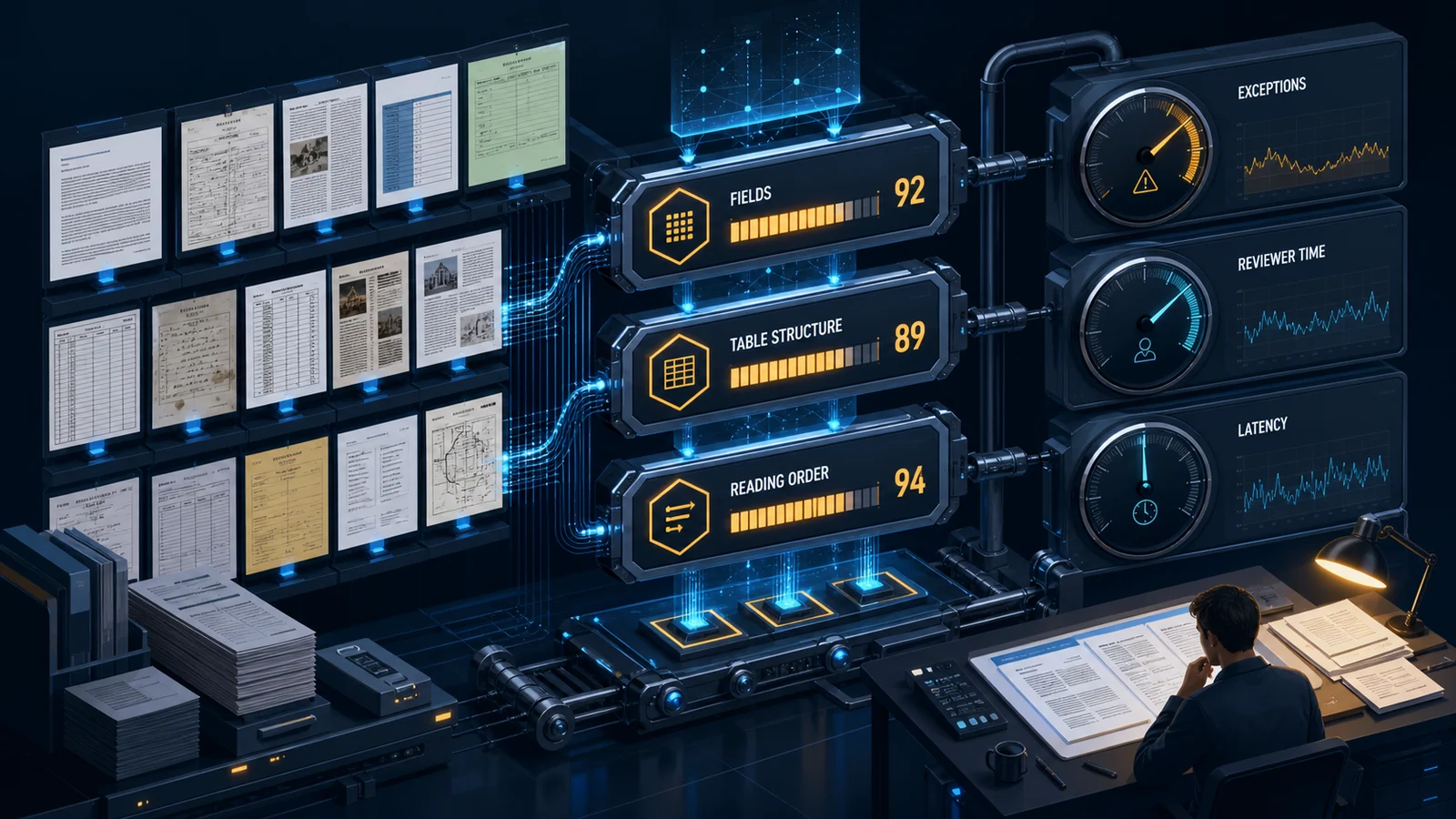
How to benchmark PDF and document parsers
A useful document-parser benchmark starts with a stratified corpus and a downstream contract, not one leaderboard score. Preserve page and field ground truth, score text, tables, reading order, structure, and abstention separately, measure review and retry cost, and keep versioned artifacts so parser or configuration changes can be compared without moving the target.

Synthetic media provenance release checklist
A synthetic-media release record should connect the approved brief, input rights, model and tool versions, human edits, source assets, Content Credentials or other provenance data, review decisions, disclosure text, exported files, and publication destination. Provenance signals help recipients inspect history, but they do not by themselves prove truth, ownership, consent, legality, or policy compliance.

AI agent identity lifecycle: access, review, and offboarding
A practical operating method for giving an agent a bounded identity, then proving who owns its access from issuance through retirement.

Browser agent security testing: an acceptance guide
A repeatable acceptance method for browser agents that must read untrusted pages without turning page content, stored credentials, or browser state into authority.

LLM gateway migration runbook: provider cutover and rollback
A migration method for teams that have chosen a gateway and now need to move providers without mistaking API compatibility for operating equivalence.

LLM judge calibration: human agreement and release gates
A reusable method for validating the evaluator and its rubric before a model-generated score influences a product or release decision.

How to assess whether an application is ready for AI agents
Use a repeatable evidence record to decide whether one application workflow is ready for a bounded AI-agent pilot, rather than treating a successful demo as operational proof.

How to build an AI red-team dataset for a release decision
A red-team dataset is useful when it turns known and plausible failure paths into reviewable evidence, not when it merely collects provocative prompts.

How to secure background coding agents before they touch production
A background coding agent should receive a narrow task, disposable execution boundary, scoped credentials, deterministic CI gates, and an accountable human owner before it can create a production-facing change.

EU AI Act Article 50 transparency checklist for implementation teams
Use Article 50 as a workflow and evidence checklist: identify the role, output, audience, control, exception, and responsible reviewer before exposure.

How to review AI agent traces before production
A trace becomes release evidence only when reviewers can reconstruct the task, verify every consequential action, and distinguish safe failure from silent success.

How to audit coding-agent memory for safe reuse
Persistent context is useful only when teams can explain what was stored, why it was recalled, who may see it, and how stale or hostile memory is removed.

How to run an enterprise AI assistant governance pilot
A governance pilot should approve one bounded use with measurable evidence, not grant an assistant open-ended authority because a demo looked productive.

How to build a RAG evaluation dataset that finds real failures
A useful RAG test set measures retrieval, evidence support, refusal, authorization, and operational recovery separately instead of rewarding fluent average answers.
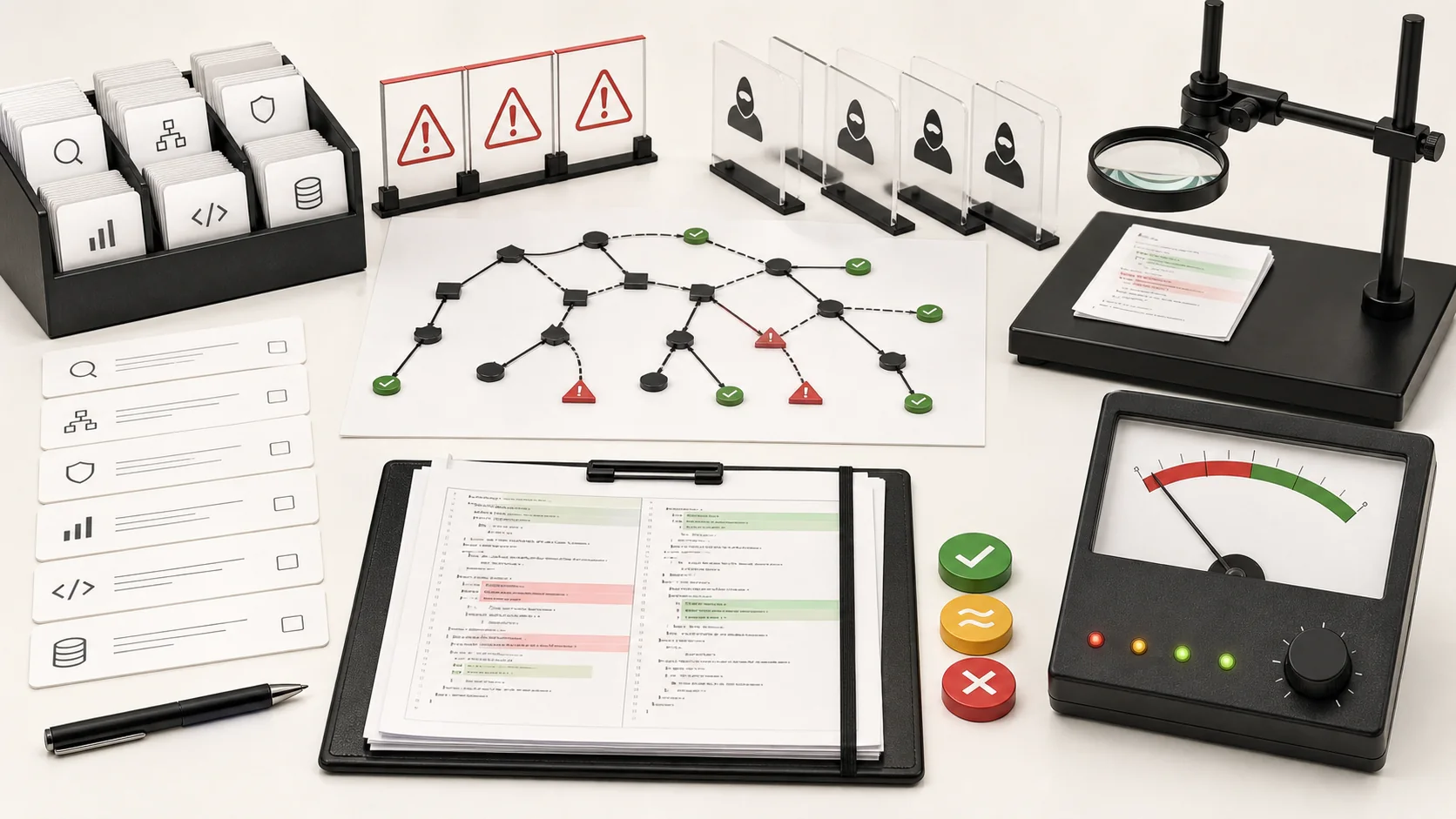
An agent evaluation stack with Promptfoo, AgentScope, and SWE-agent
Agent evaluation needs more than a final-answer score: test the task set, execution trace, security boundary, side effects, and recovery behavior separately.
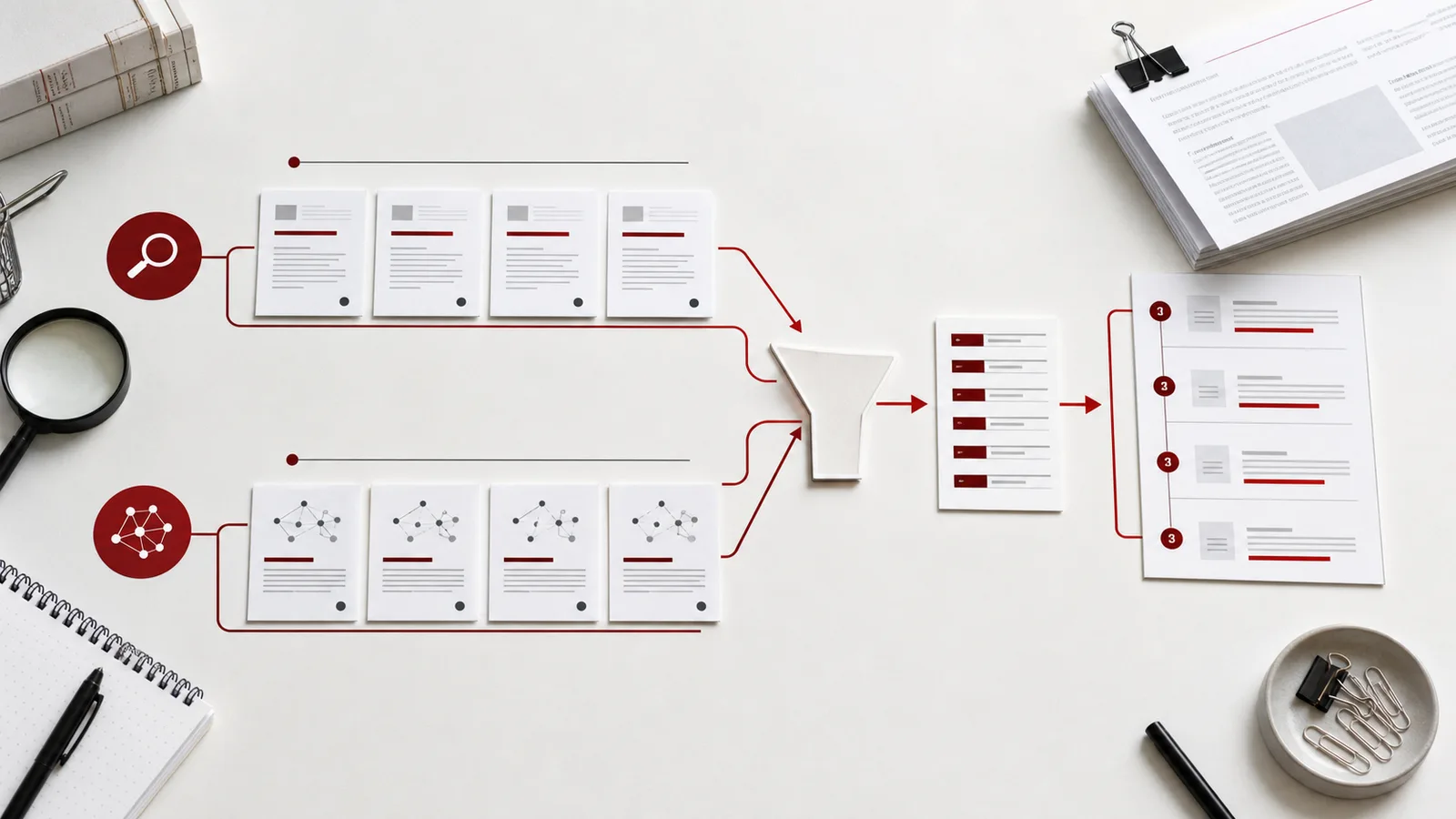
Hybrid search guide for RAG systems that need better citations
Hybrid retrieval earns its complexity only when exact terms, semantic matches, reranking, and citation checks can be evaluated independently.
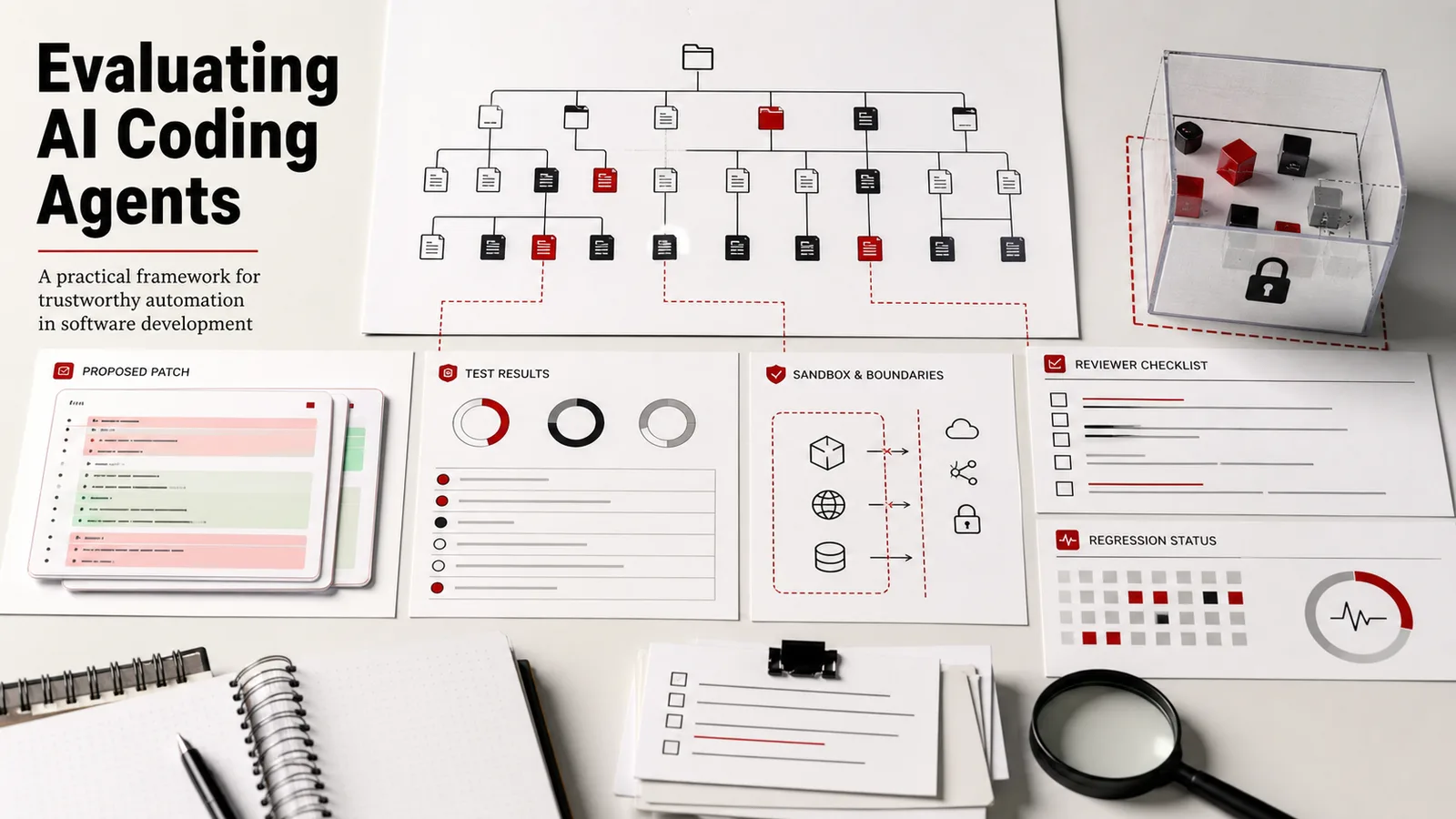
How to evaluate AI coding agents with repository tasks
Coding agents should be evaluated on representative repository work, not polished demos or isolated code-generation prompts.

Chunking strategy for RAG systems with trustworthy citations
A test-driven guide to RAG chunk boundaries, size, overlap, metadata, parent context, tables, and citation units for reliable document retrieval.
Document extraction QA guide for invoices, contracts, and forms
A practical guide to QA for AI document extraction, including schemas, sampling, confidence thresholds, exception handling, and audit trails.

Prompt evaluation playbook for production AI workflows
A production prompt evaluation method covering task datasets, deterministic assertions, graded quality, safety cases, cost, and release regression gates.
A RAG evaluation playbook before your document assistant goes live
RAG quality becomes manageable when retrieval, citation support, answer usefulness, and freshness are tested as separate failure modes.

Support automation rollout guide from pilot to governed production
A rollout plan for AI support automation covering knowledge readiness, routing, escalation, QA sampling, feedback loops, and policy updates.