AI governance, procurement & security
Governance, procurement, vendor review, data retention, and risk controls for AI tool adoption.
AI governance, procurement & security groups related ToolVerse Insights articles so teams can move from research context to practical AI tool evaluation with less guesswork.
Move from landscape to operating control.
For: CIO, security, legal, procurement, and AI governance teams turning policy into enforceable product requirements, operating controls, and incident evidence.
Treat AI governance as a lifecycle of enforceable decisions: define allowed data and actions, verify vendor and system controls, test adversarial and failure cases, preserve audit evidence, and assign incident ownership. A policy is incomplete until operators can detect, contain, recover, and reevaluate the deployed workflow.
- 01 Translate policy into controls
AI governance tooling guide for teams moving from policy to practice
Map governance requirements to owners, evidence, and enforcement points.
Read the flagship guide → - 02 Scope action-system risk
Desktop and browser agent guide for workflows that leave the chat window
Evaluate browser and desktop agents as privileged action systems.
Read the flagship guide → - 03 Test prompt-injection defenses
Prompt-injection risk guide for AI tools connected to data and actions
Verify deterministic authorization and containment with hostile inputs.
Read the flagship guide → - 04 Prepare incident response
AI Incident Response Playbook
Preserve evidence, contain actions, recover safely, and add regression gates.
Read the flagship guide →

AI Evaluation Platform Selection Guide
Select an AI evaluation platform using dataset ownership, trace coverage, evaluator calibration, release gates, privacy, portability, and cost.

LangSmith Review for Observability and Evaluation
A source-verified LangSmith review covering tracing, datasets, offline and online evaluation, deployment options, privacy, pricing, and lock-in.

AI agent identity lifecycle: access, review, and offboarding
A practical operating method for giving an agent a bounded identity, then proving who owns its access from issuance through retirement.

Browser agent security testing: an acceptance guide
A repeatable acceptance method for browser agents that must read untrusted pages without turning page content, stored credentials, or browser state into authority.

Helicone review: request observability and gateway controls
Helicone puts request-level observability and gateway controls close to model traffic, but a responsible team still needs trace-to-evaluation workflows, data rules, and operational ownership.

LiteLLM review: enterprise gateway routing and ownership
LiteLLM can unify provider access and apply gateway controls, but a team still owns the provider contracts, credentials, policies, operations, and business outcomes.

LLM gateway migration runbook: provider cutover and rollback
A migration method for teams that have chosen a gateway and now need to move providers without mistaking API compatibility for operating equivalence.

Microsoft Entra agent identity governance: accountable identities, sponsors, and lifecycle boundaries
Microsoft’s July governance announcement reinforces a distinct identity model for agents, but availability and licensing differ across the platform and individual controls.

How to build an AI red-team dataset for a release decision
A red-team dataset is useful when it turns known and plausible failure paths into reviewable evidence, not when it merely collects provocative prompts.

EU AI Act Article 50 transparency checklist for implementation teams
Use Article 50 as a workflow and evidence checklist: identify the role, output, audience, control, exception, and responsible reviewer before exposure.

Promptfoo review: evaluation and red-team evidence for AI systems
Promptfoo makes evaluation cases and adversarial probes easier to keep beside application code, but a useful result still depends on a representative dataset, defensible scoring, and a human-owned release decision.

How to run an enterprise AI assistant governance pilot
A governance pilot should approve one bounded use with measurable evidence, not grant an assistant open-ended authority because a demo looked productive.

LibreChat vs Open WebUI: governance comparison
Both projects can provide a capable self-hosted AI workspace, but governance depends on the exact deployment, identity path, extensions, model providers, and operating controls—not the word self-hosted.

EU AI Act transparency guidelines: what providers and deployers need to separate
The Commission's July guidance clarifies four Article 50 transparency duties; implementation starts with identifying the organisation's role for each system and output.

AI data retention architecture guide
Retention is an observable system property: every request, derived artifact, restore path, and legal record needs an owner, clock, and testable deletion outcome.
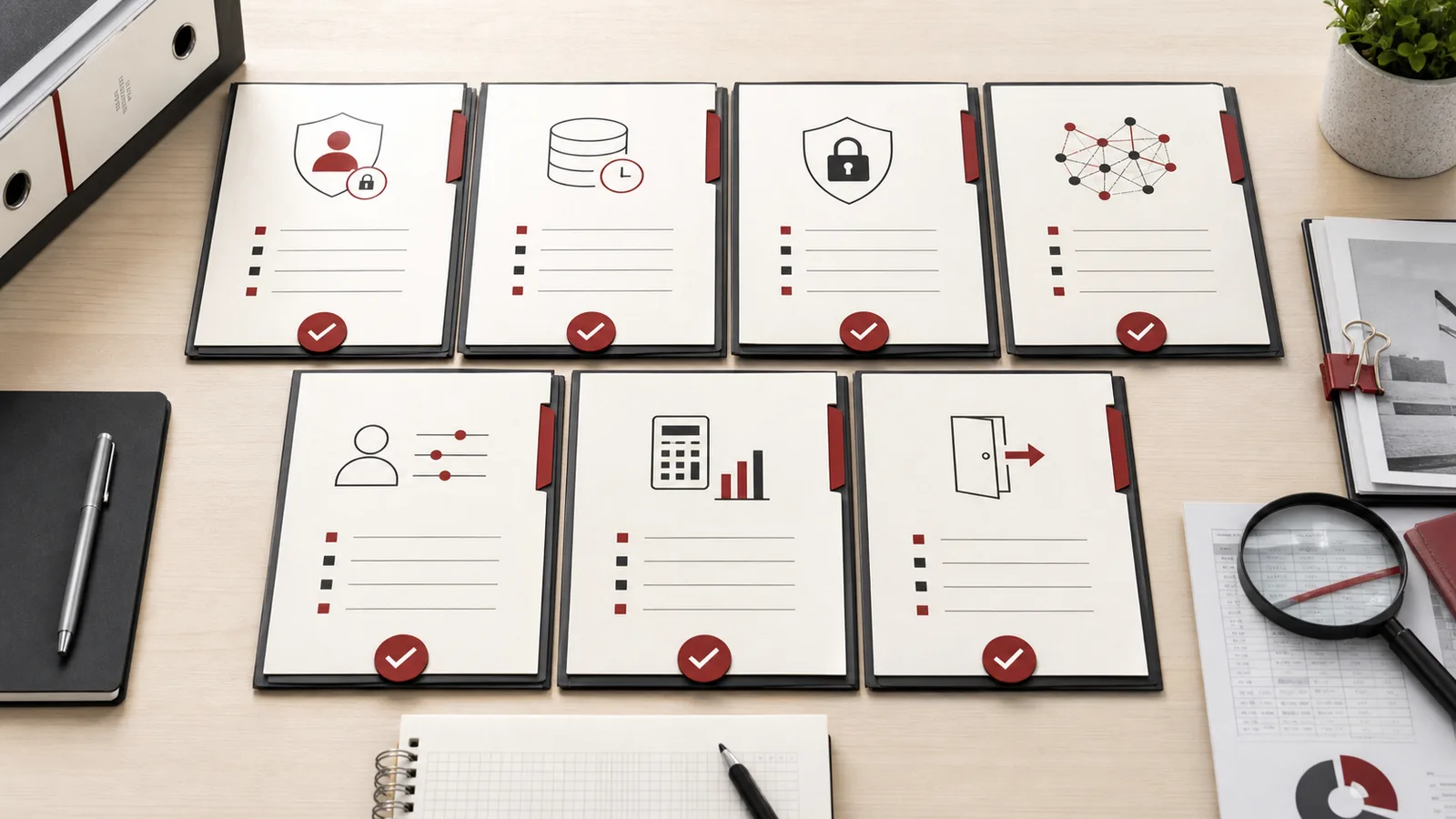
AI security questionnaire automation guide
Questionnaire automation is useful when it retrieves current approved evidence and reduces duplicate work without converting a reusable answer into an unreviewed promise.
AI security questionnaire tools comparison for procurement teams
Compare governance, evaluation, agent-security, and evidence-management tool types for AI vendor questionnaires and procurement review.
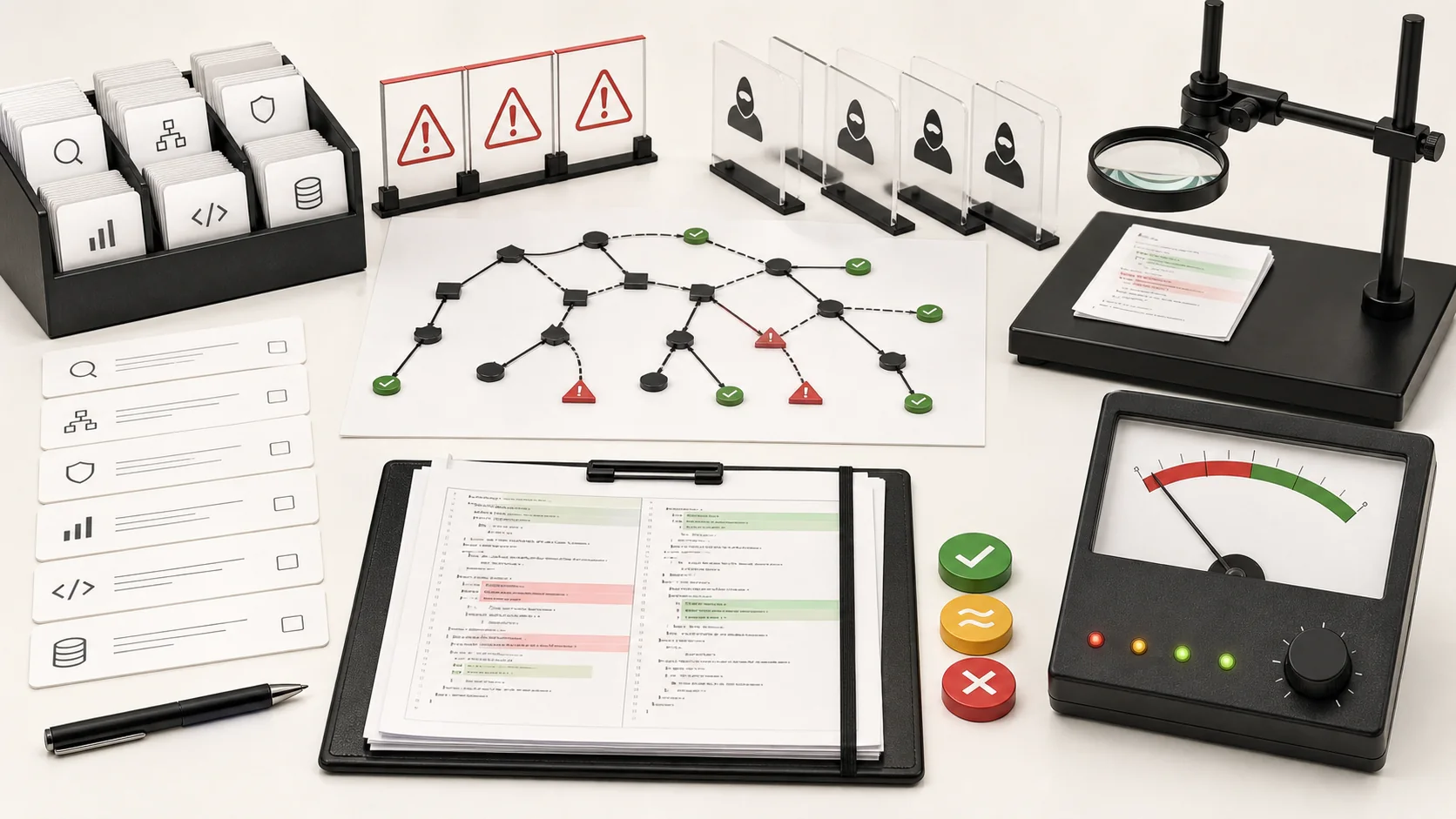
AI Incident Response Playbook
A decision framework for AI incident response that turns official documentation into a controlled pilot, operating record, and defensible selection.

Enterprise AI Gateway Selection Guide
A decision framework for enterprise AI gateway procurement that turns official documentation into a controlled pilot, operating record, and defensible selection.
AI audit log checklist for governance and incident review
A brief checklist for AI audit logs covering prompts, tools, data access, approvals, outputs, incidents, and retention decisions.
AI governance tooling guide for teams moving from policy to practice
Governance becomes operational when inventories, risk tiers, evaluations, monitoring, and incident ownership share one review loop.
AI data retention policy guide for internal tools
A practical AI retention policy method covering prompts, files, outputs, embeddings, traces, provider logs, deletion, legal holds, and access.
AI procurement checklist for tool buyers
A defensible AI purchase makes data use, retention, security, pricing, administration, and exit terms visible before a pilot expands.
AI vendor security questionnaire for SaaS and agent tools
A practical questionnaire covering AI data flows, model providers, connectors, agent actions, retention, evaluation, monitoring, incidents, and exit.

Desktop and browser agent guide for workflows that leave the chat window
A guide to evaluating browser and desktop agents by permissions, browser state, authentication, screenshots, automation limits, and human approvals.
Prompt-injection risk guide for AI tools connected to data and actions
A practical guide to prompt-injection risks in RAG, browser agents, MCP tools, email, documents, and customer-facing chatbots.