AI procurement checklist for tool buyers
A defensible AI purchase makes data use, retention, security, pricing, administration, and exit terms visible before a pilot expands.
Compare the tools behind this article on ToolVerse.
Open ToolVerse for evidence, pricing context, alternatives, and current review status. Every link below navigates to the external ToolVerse directory.
Compare AIGovTool and Promptfoo and AgentShield Open on ToolVerse · externalQuick answer
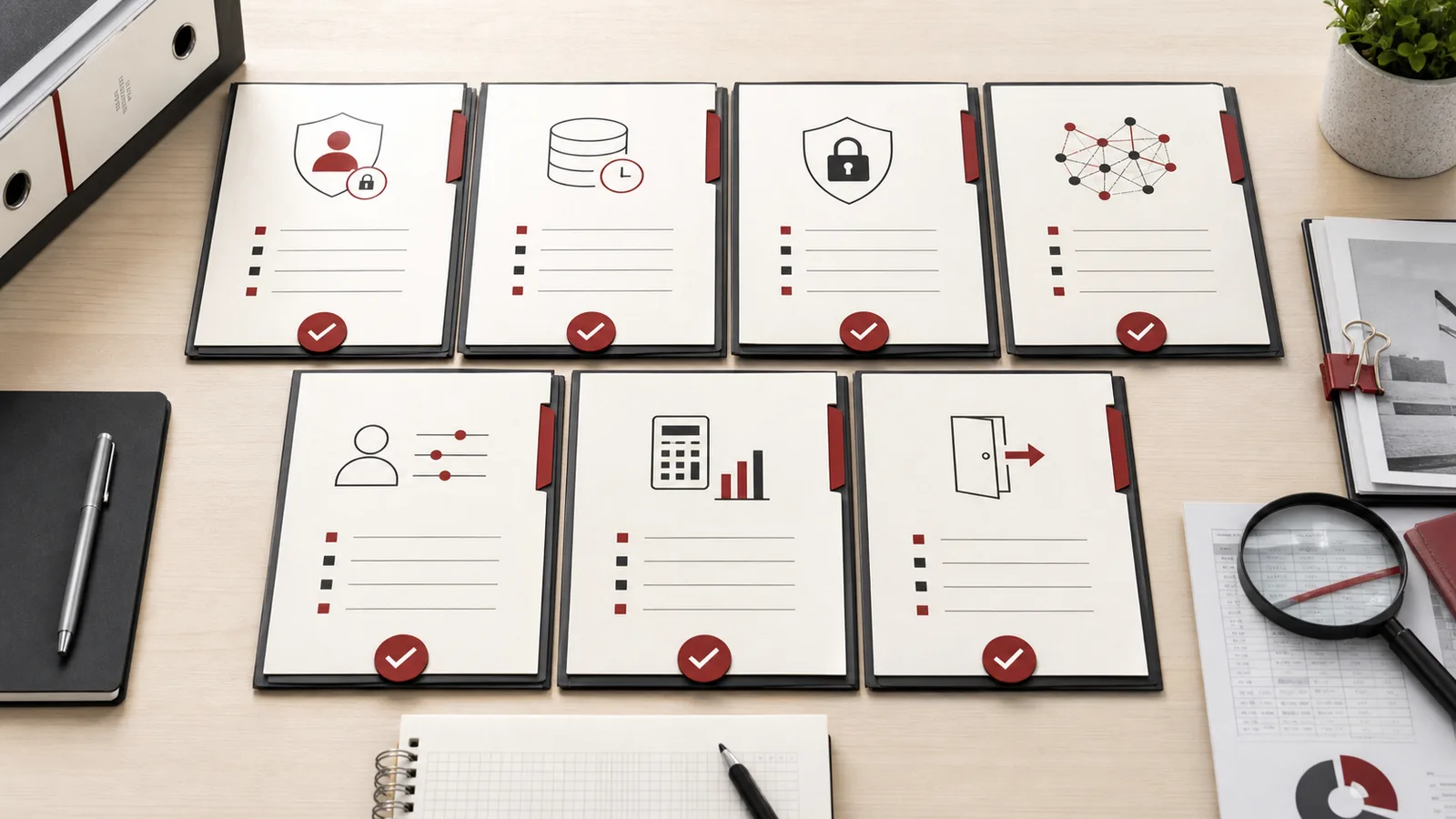
Procurement should start with one named workflow and an acceptance test, not a broad request to “buy AI.” Product, security, privacy, legal, accessibility, finance, and operations then review the same evidence. This checklist is for buyers who must distinguish a useful pilot from a durable production commitment.
The evidence packet
| Decision area | Required evidence |
|---|---|
| Workflow value | Baseline, representative tasks, success rate, reviewer time |
| Data | Flow map, training-use terms, retention, deletion, regions, subprocessors |
| Actions | Connectors, scopes, approvals, logs, rollback, incident controls |
| Quality | Evaluation set, known limits, monitoring, model-change notice |
| Commercial | Full usage model, overages, support, renewal, price-change terms |
| Exit | Export format, deletion certificate, replacement path, transition time |
Procurement sequence
- Name the user, input, output, connected systems, and consequence of failure.
- Exclude workflows that cannot meet data or permission boundaries.
- Run a paid or time-boxed pilot on the same task set for all finalists.
- Review the vendor security questionnaire and resolve material gaps in writing.
- Calculate model, storage, integration, review, support, and change-management cost.
- Negotiate audit evidence, incident notice, material model changes, deletion, and exit.
- Approve a limited scope with an owner, monitoring cadence, and renewal criteria.
Example: low seat price, high review cost
Vendor A costs half as much per seat as Vendor B. In the pilot, A saves 12 minutes of drafting but creates 18 minutes of verification; B saves 10 minutes and creates 4 minutes of review. The correct total-cost comparison includes the reviewer, not only the invoice. A cheaper license can be the more expensive workflow.
Tool and market research
Use Promptfoo when a candidate needs repeatable model or prompt evaluation. AgentShield is relevant to agent-security testing, while AIGovTool is an Intel SGX and hardware-attestation governance proof of concept that may inform a bounded confidential-computing pilot. It is not a procurement workflow, approval system, or source of vendor contractual evidence. These links are starting points; verify each tool’s current primary sources and terms. Browse the AI automation decision hub by workflow fit.
Risk and exit
Do not accept “enterprise-ready” as evidence. Ask for exact retention periods, support boundaries, tenant isolation, connector scopes, and audit artifacts. Preserve source data, prompts, evaluation cases, and exportable records so switching remains possible. Contractual deletion should cover backups and derived data, not only the user interface.
Build the pilot contract
Write the pilot’s users, workflow, data classes, integrations, duration, support, and exit before granting broad access. Define the baseline and target: accepted task completion, reviewer minutes, error severity, adoption, latency, and total cost. A pilot is not successful because people logged in or generated content; it must improve a verified outcome without shifting unmeasured work.
Use representative cases, including failures and requests the product should refuse. Keep high-impact actions in approval mode. Ask the vendor to identify which capabilities use different models, regions, retention, or subprocessors. Optional features such as web search, feedback, connectors, and recording can change the data boundary and need separate approval.
Contract and assurance details
Translate material questionnaire answers into contract terms or documented exceptions. Cover customer-data use, model training, retention, deletion, region, subprocessors, incident notification, audit evidence, vulnerability handling, availability, support, and material model or control changes. Identify precedence when the order form, data agreement, security page, and online terms conflict. When the selected questions become recurring evidence work, use a security questionnaire automation workflow that retains a named owner, approval, freshness date, and exception record for every reused claim.
Service reports and certifications are inputs, not universal proof. Check scope, period, systems, carve-outs, and whether the AI feature and model gateway are included. For important controls that are outside an audit, request architecture evidence or observe a test. Record whether each conclusion is verified, contractually committed, or accepted as residual risk.
Administration and adoption
Test single sign-on, provisioning, role separation, audit exports, connector approval, usage limits, and offboarding before expansion. Identify who owns prompts, templates, evaluation, access review, vendor relationship, incidents, and renewal. A product with strong generation but weak administration can create more operating cost than it saves.
Plan user communication and training around approved use cases, sensitive data, review expectations, and escalation. Monitor shadow usage rather than assuming the licensed platform eliminated it. Provide a safe route for new workflow requests so employees do not bypass controls to get work done.
Financial and exit model
Model seats, model usage, storage, retrieval, connectors, premium security, support, implementation, review, and change management. Include failed runs and human repair in cost per verified outcome. Test contract caps and budget alerts against a high-usage scenario.
Before signing, export configuration, prompts, logs, evaluations, and business records in usable formats. Document replacement and manual fallback, credential revocation, connector cleanup, data deletion, and transition assistance. Renewal should depend on measured value, incidents, stable unit cost, control evidence, and current terms—not only user count.
Approval record
The final memo should name the workflow, approved users, data classes, systems, action limits, provider plan, regions, retention, pilot results, residual risks, compensating controls, owners, budget, and review date. Link evidence and record unresolved assumptions. A ticket that says only “security approved” is difficult to operate or revisit.
Give every exception an expiry date. If an audit report, deletion feature, or narrow connector scope is missing, define the temporary control and condition for expansion. At renewal, compare the memo with deployed reality: products accumulate connectors, users, stored data, optional features, and new models. Revalidate scope rather than treating the first approval as permanent.
Run a pre-production readiness meeting with the people who will administer and support the service. Verify provisioning, role assignment, budget alerts, incident contacts, status communication, backup workflow, and user guidance. Record the exact configuration approved and prevent ordinary users from enabling unreviewed connectors or feedback modes.
Procurement should also confirm accessibility and support for affected users. Test the actual interface with keyboard and assistive technology where relevant, document accommodation paths, and include accessibility remediation in the contract or rollout risk. Productivity claims do not justify excluding users from the workflow.
Decision
Approve the smallest production scope supported by the evidence packet. Put expansion and renewal behind measured value, acceptable incidents, stable cost, and revalidated provider terms.