Azure Copilot Observability Agent GA: scope, signals, and rollout boundaries
Microsoft made the Observability Agent generally available, while autonomous operations and its durable agent resource remain public preview.
Continue your research in ToolVerse.
Open ToolVerse for evidence, pricing context, alternatives, and current review status. Every link below navigates to the external ToolVerse directory.
Explore AI automation tools Open on ToolVerse · externalAzure Copilot Observability Agent GA: an operations brief
Quick answer
Microsoft announced general availability of Azure Copilot Observability Agent on June 23, 2026. Built on Azure Monitor, it is designed to help operators move from telemetry and alerts to an investigation report, supporting findings, and recommended next steps. General availability does not mean every capability shown around the launch has the same status: Azure Monitor issues (preview), autonomous operations (preview), and the Observability Agent resource (preview) were not part of that GA boundary.
Treat the release as a reason to evaluate a bounded investigation workflow, not permission to hand production control to an agent. Start with one monitored application, confirm the telemetry and role boundary, compare its evidence with the current incident process, and require an operator to validate conclusions and authorize any change.
What happened
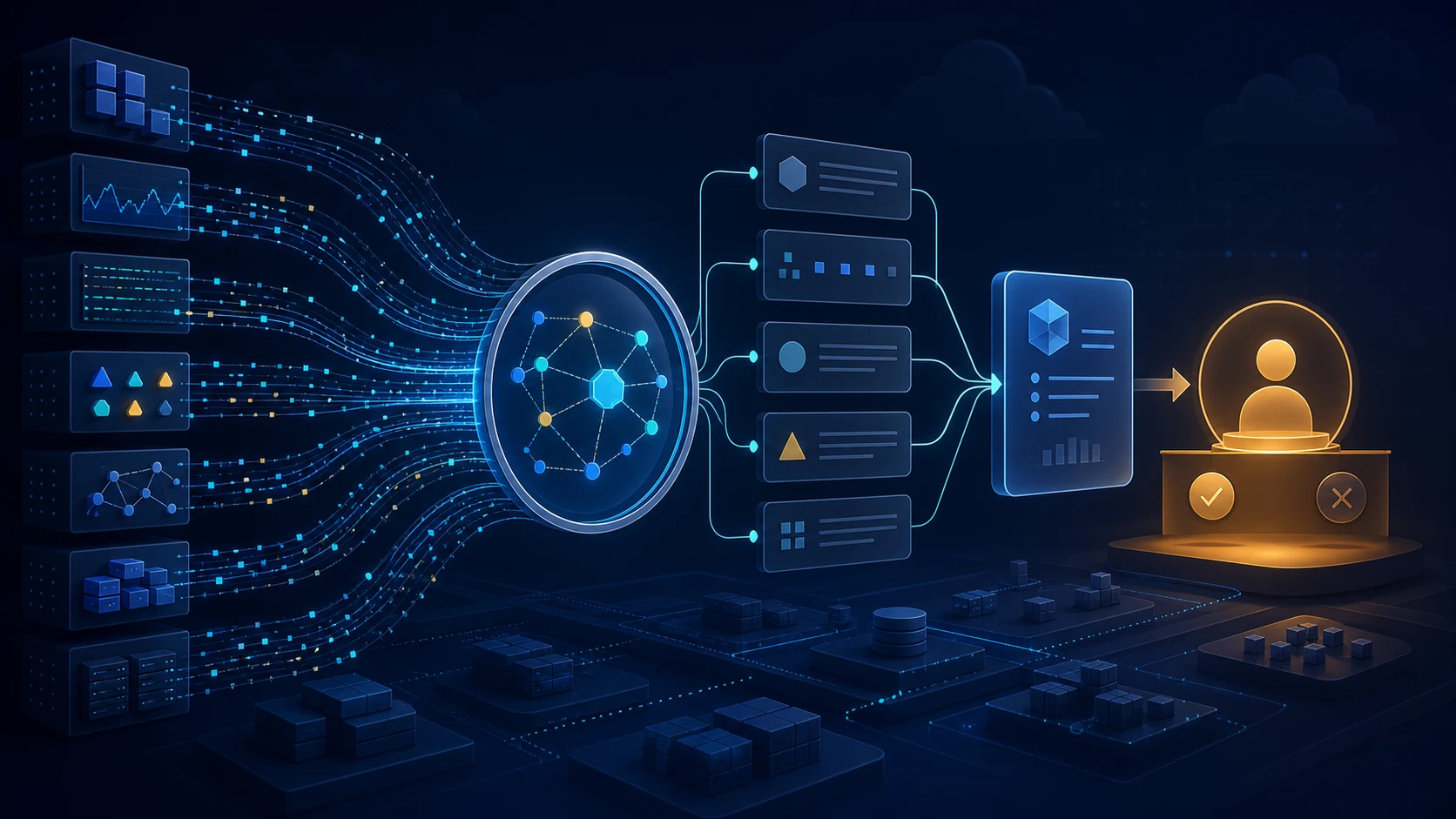
Microsoft’s launch article says the generally available agent correlates signals across agents, applications, infrastructure, and services. The companion Azure Observability post describes users moving from telemetry and alert noise to investigations, explainable reasoning, and recommended next steps. Both place the product inside Azure Monitor rather than presenting it as a replacement for the monitoring data and controls underneath it.
The announcement also introduced autonomous operations (preview). That distinction matters. The generally available on-demand chat and deep-investigation experiences can work without an Observability Agent resource (preview). Background alert correlation, automatic creation of Azure Monitor issues (preview), and automatic deep investigations use that separately provisioned preview resource, which carries identity, scope, configuration, and governance.
Why it matters
The release therefore has two decision tracks. One is whether the generally available investigation experience improves operator understanding on a known incident class. The other is whether a team is ready to evaluate preview automation with tighter rollout, cost, region, and support constraints. Combining both in one pilot makes failures harder to interpret.
Confirmed details
The documented signal set is broader than a chat box. Microsoft describes reasoning over logs, metrics, traces, discovered topology, alerts, and operational context across application, infrastructure, and Azure platform layers. Its best-practices guidance specifically calls for Application Insights requests, dependencies, and exceptions, plus resource logs from supporting components. Missing correlation fields or resource context can make findings incomplete even when the interface itself works correctly.
The on-demand workflows have different jobs:
| Workflow | Documented purpose | Operator boundary |
|---|---|---|
| Chat with observability data | Explore a scoped resource through natural-language questions and generated queries | Context is temporary and grounded in the resource where chat starts |
| Deep investigation | Correlate evidence for an active incident and produce findings with recommended next steps | The operator reviews reasoning, queries, resources, and supporting findings |
| Azure Monitor issues (preview) | Preserve investigation context for handoff and later work | The team owns issue review, escalation, and follow-up |
| Autonomous operations (preview) | Correlate alerts, create preview issues, and run deep investigations in the background | Humans still decide every mitigation or environment change |
Microsoft says a deep investigation can span Azure Kubernetes Service, virtual machines, Application Insights, and Azure platform conditions. It surfaces which signals and resources it considered so an operator can inspect the path to the recommendation. That is useful evidence, but a likely cause remains a hypothesis until the team verifies it against the system and the incident timeline.
The preview autonomy boundary is explicit. Microsoft Learn says the agent does not restart resources, change configuration, resolve incidents, or automatically mitigate. Autonomous operations (preview) create reviewable Azure Monitor issues (preview) and investigation material. The Observability Agent resource (preview) page says the Azure portal scopes a resource to one Application Insights resource, while the API can support up to ten; provisioning is documented for the portal or ARM and Bicep, not Azure CLI or Terraform.
Microsoft also documents general constraints that belong in a pilot record: a conversation cannot continue beyond 24 hours, English is the supported language while other languages have limited support, and customer-managed keys are not supported for Observability Agent conversations. Region availability differs between the broader agent and preview autonomous operations, so a team should verify the current region table rather than infer availability from Azure Monitor alone.
Who is affected
SRE, platform engineering, cloud operations, and observability teams are the direct evaluators, while service owners, incident commanders, security teams, and finance owners inherit the evidence, access, change-control, and consumption consequences. The launch article includes customer statements, but they are Microsoft-published case evidence rather than an independent benchmark. Microsoft quotes KPMG Audit Application Support and Operations as estimating that the capability reclaimed 250 engineering hours per month by accelerating investigation. It also quotes PolicyVault describing faster correlation between service telemetry and Azure resource health. Those statements show the kinds of outcomes early users reported; they do not establish a transferable time saving for another environment.
A defensible pilot should translate those claims into local measures: median time to a reviewable hypothesis, operator minutes spent gathering context, percentage of cited evidence that is relevant, missed dependencies, false correlations, and time from recommendation to a verified recovery decision. Compare those measures with the same incident class under the current process.
Sources and verification note
The six first-party Microsoft sources were publicly accessible and rechecked on July 29, 2026. They establish the launch status, supported workflows, telemetry prerequisites, current limitations, deep-investigation behavior, and preview resource boundary. Customer outcomes remain Microsoft-published case evidence. This article did not run the agent and makes no hands-on reliability claim.
Limitations and remaining unknowns
The documentation does not prove investigation accuracy for a particular topology, telemetry design, retention policy, or incident mix.
Telemetry quality is a hard dependency. If resource logs are disabled, trace correlation is broken, deployment changes are not recorded, or services use inconsistent names, the agent has less evidence from which to reason. A polished summary cannot compensate for missing input.
Preview autonomy adds separate uncertainty around region fit, provisioning surfaces, scale limits, support expectations, and operational cost. Automatic deep investigations can create ongoing consumption, so alert volume and correlation behavior should be monitored before a wider rollout. The preview label should remain visible in architecture and procurement records.
Finally, the agent recommends next steps; it does not own incident command. Teams still need an escalation path, evidence retention, approval gates, rollback criteria, and a way to document when an operator rejects the agent’s conclusion. The AI incident response playbook provides that wider control frame.
What to do next
- Choose one Application Insights-backed service and one recurring incident class with a known evidence trail.
- Use the agent observability guide to inventory logs, metrics, traces, topology, ownership, and correlation fields before the pilot.
- Confirm access through Azure roles, define who can start investigations, and keep remediation permissions outside the evaluation.
- Replay or observe representative incidents and score evidence relevance, unsupported conclusions, missed dependencies, operator time, and time to a verified hypothesis.
- Test generally available on-demand chat and deep investigation before enabling autonomous operations (preview), so the team can separate reasoning quality from background correlation behavior.
- Record current region, language, encryption-key, retention, preview, and provisioning constraints with an owner and recheck date.
For an adjacent view of agent tracing and evaluation workflows, inspect the live LangSmith profile on ToolVerse. For broader workflow alternatives, continue through the ToolVerse AI automation category. Neither directory link makes LangSmith a substitute for Azure Monitor; it is a comparison point for teams defining what investigation evidence and review controls they need.
The immediate decision is narrower than adopting autonomous operations (preview): determine whether one on-demand investigation produces faster, more reviewable evidence without weakening access, incident-command, or change-approval boundaries.
FAQ
Is every Azure Copilot Observability Agent capability generally available?
No. Microsoft made on-demand chat and deep investigation generally available. Azure Monitor issues (preview), autonomous operations (preview), and the Observability Agent resource (preview) were not generally available on the June 23 launch date.
Can the Observability Agent automatically remediate an incident?
No. Autonomous operations (preview) can correlate alerts and create Azure Monitor issues (preview), but Microsoft states that the agent does not restart resources, change configuration, resolve incidents, or make other environment changes.
What should a rollout measure first?
Measure investigation coverage, evidence correctness, time to a reviewable hypothesis, missed signals, false correlations, operator review time, and whether the workflow preserves the access and approval boundaries required by the team.