LangGraph review: durable orchestration for production agents
LangGraph gives teams explicit graph state, persistence, and interruption patterns, but it shifts workflow design, checkpoint safety, and recovery discipline back to the application owner.
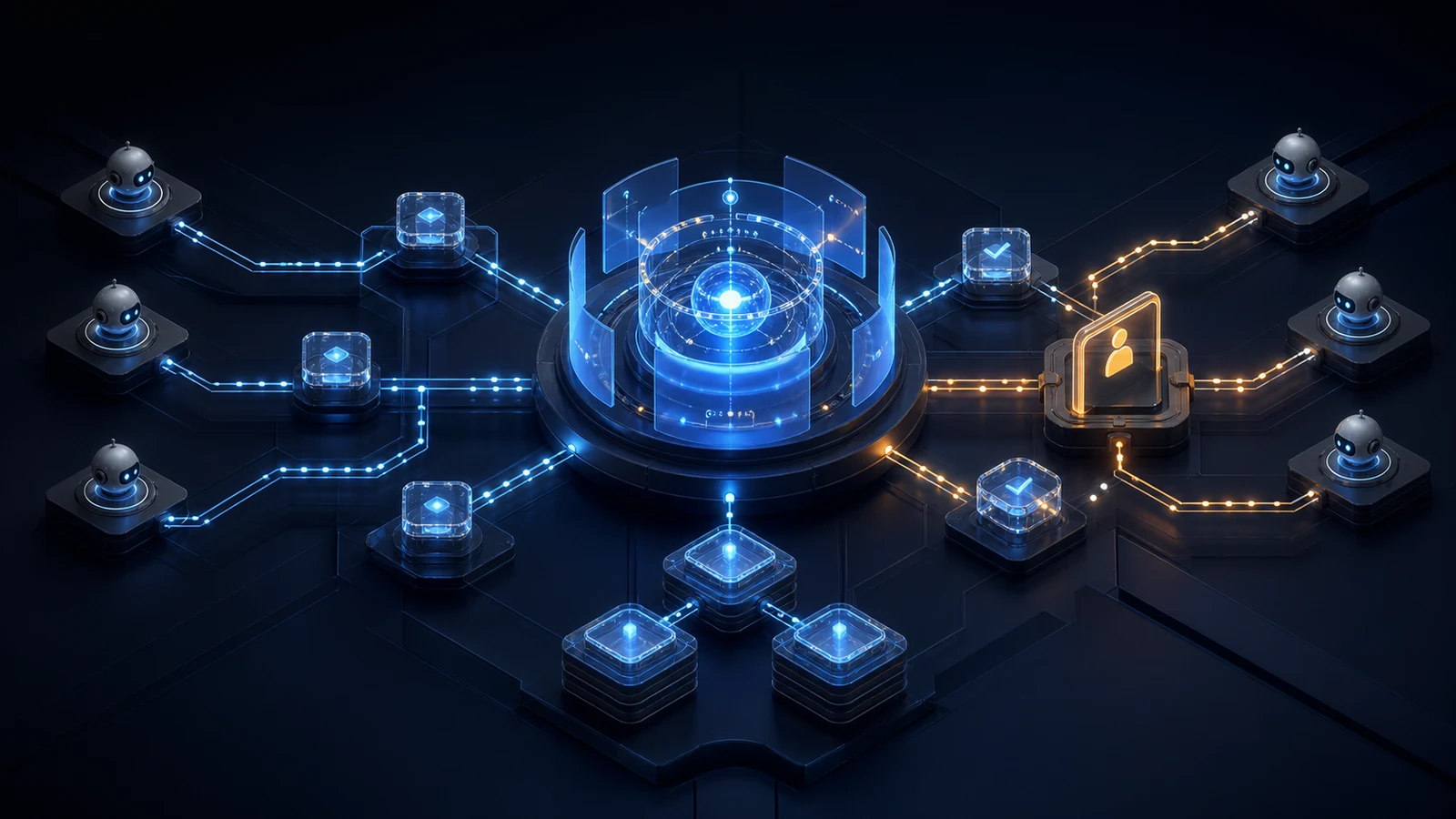
Compare the tools behind this article on ToolVerse.
Open ToolVerse for evidence, pricing context, alternatives, and current review status. Every link below navigates to the external ToolVerse directory.
Compare LangGraph and Pydantic AI and AutoGen Open on ToolVerse · externalBottom line
LangGraph is compelling when a production agent is better described as a stateful workflow than as a single model loop. Its official material documents graphs made from state, nodes, and edges; persistence through checkpointers; and interrupts that can pause a run for external input. Those primitives make the control plane visible. They do not make the resulting system safe by default.
The practical decision is whether a team needs durable orchestration badly enough to own it. A customer-support escalation, approval-gated remediation, or multi-stage investigation can benefit from explicit branches and a restartable cursor. A short request that only calls a read-only service often does not. The broader agent frameworks comparison is useful for separating this graph-runtime choice from a higher-level agent API or a typed application library.
This is a source-verified review, not a benchmark or a deployment report. Official sources establish documented interfaces and project direction. Public issue reports and a practitioner discussion help identify evaluation cases. They do not establish universal reliability, performance, security, or fit for a particular organization.
Who it is for
LangGraph is a documented fit for teams that can name their workflow states and who owns every transition. Good candidates include a platform team operating a long-lived agent, an engineering group that needs a human approval step before a consequential tool call, and an application that must resume a partially completed job without rebuilding its entire context from scratch. Its value increases when an operator needs to inspect why a run stopped, where it will resume, and which action is waiting.
It also suits teams prepared to model state deliberately. That means deciding what belongs in the graph state, what belongs in a durable system of record, what is transient, and what must never enter a checkpoint. The agent runtime platform selection guide provides a useful procurement frame: require a failure diagram, a data-flow inventory, and a named owner before accepting a runtime feature as an operating control.
Who should skip it
Teams should skip or defer LangGraph when they cannot describe the workflow beyond “ask the model again.” A simple, stateless classifier, extraction task, or read-only assistant may be clearer as ordinary application code with structured validation. Adding a graph can make a small service harder to debug without creating a meaningful recovery benefit.
It is also a poor immediate fit when no one can own the persistence layer, backups, retention, schema changes, incident response, or upgrades. A graph is not an audit record by itself, and a checkpoint is not a transaction ledger. Do not introduce durable agent state into sensitive workflows until data classification, access boundaries, deletion requirements, and trace handling have been reviewed.
Capabilities and limitations
The official graph API describes nodes as functions that read and update shared state, connected by edges and conditional routing. That is useful because control flow is part of the application design rather than hidden inside an agent loop. Persistence documentation describes checkpointers that save graph state by thread identifier, allowing later replay, time travel, or resume patterns according to the selected implementation.
The interruption model is particularly important for production work. Official documentation describes interrupt() as saving state and waiting for a resume value. It also warns that a node restarts from its beginning after resume. Therefore a tool call that happened before the interrupt can run again unless the application guards it. Record an operation identifier and completed result outside the model transcript; on retry, consult that record before sending an email, changing a ticket, or touching any other external system.
The project repository is the authoritative record for current code, releases, and its MIT license. It does not transfer operational responsibility. The application must choose a suitable persistent checkpointer, protect credentials, restrict graph inputs, define retention, validate tool arguments, and patch dependencies. For a safe tool boundary, pair the graph with the deterministic controls in the MCP security checklist: allowlists, bounded arguments, identity propagation, and explicit approval for consequential actions.
Community feedback: consensus and disagreement
Public feedback repeatedly points to the same attraction: checkpoints and interrupts offer a practical vocabulary for durable, approval-gated workflows. A Reddit practitioner report describes using an interrupt plus a PostgreSQL-backed saver for an incident-response approval pattern. That is one practitioner report, not evidence that the pattern works in every production environment.
Two separate GitHub reports raise checkpointer concerns in PostgreSQL-related paths: one describes compatibility with older checkpoints, and another reports a type error on a fresh thread. Together, they support a narrow recurring theme: persistence integration and version transitions deserve a real recovery test. They do not establish the scope, current status, root cause, or security impact of any issue. Verify the exact version, backend, migration path, and maintainer response before drawing a conclusion.
Independent analyses likewise focus on the graph-versus-framework boundary and workflow recipes. They are useful for comparing conceptual roles, but official documentation governs LangGraph capabilities and maintenance claims. Community discussion should become a test card: interrupt a run at each side effect, restart it, and confirm that the action is neither lost nor repeated.
Cost and operational ownership
LangGraph’s open-source license is not a total-cost statement. Estimate model usage across every graph branch, checkpoint storage and database operations, trace retention, queue or worker infrastructure, secret management, monitoring, upgrades, backup and restore exercises, and review time. A graph with several model-driven nodes may increase both latency and token exposure compared with a compact deterministic workflow.
The harder cost is ownership. Assign a team to set retention and deletion rules, review state schemas, rotate credentials, test checkpointer upgrades, and investigate a stuck or resumed run. Keep the business system of record independent from opaque runtime state. A graph can remember that it intends to execute an action; the application should record whether that action was actually accepted by the downstream system.
Price and hosted-service terms can change, so this review makes no pricing conclusion. Use only current first-party terms when a hosted capability becomes part of the architecture, and include the result in the procurement record.
Alternatives
Pydantic AI is the closer option for a Python team that prioritizes typed dependencies and structured outputs but does not require a first-class graph as the core abstraction. The companion PydanticAI production review explains why type validation improves an interface without proving that an underlying model-derived fact is correct.
AutoGen is a relevant alternative when agent-to-agent conversation patterns are central, while a conventional queue, durable workflow engine, or application state machine may be more appropriate when model calls are only one step in a regulated business process. LangChain may be preferable when integration breadth and higher-level agent composition are more important than explicit graph control. Compare candidates against the same state, authorization, recovery, and evaluation cases rather than their example notebooks.
Recommendation
Choose LangGraph for a limited pilot when one named workflow needs explicit durable state, conditional routing, and an approval or recovery boundary that the team can operate. Start with a read-only or reversible action. Write the state schema, thread identity rules, timeout policy, allowed tools, and failure owner before wiring in a model.
The acceptance test should simulate provider failure, malformed tool output, a process stop after an external action succeeds, a delayed approver, and a restart on a second worker. Inspect the persisted state and traces for unnecessary sensitive content. A successful happy path is not enough. Approve broader use only if recovery preserves the right state, authorization remains deterministic, and repeated execution does not duplicate side effects.
A practical evaluation record
Make the graph reviewable as an artifact, not just as a diagram. For each node, document its permitted inputs, state fields it may read and write, the models or services it can invoke, its timeout, its retry class, and whether it can cause an external effect. For each edge, record the condition that selects it and what evidence an operator can inspect after it is taken. This turns an apparently flexible agent design into a set of testable contracts.
Use a synthetic but realistic data set. Include normal requests, incomplete records, conflicting instructions, stale retrieved content, a request from a user with insufficient permission, a provider outage, a checkpoint database outage, and a result that requires a human refusal. Keep the cases versioned. A later graph or model change is meaningful only when it can be compared against the same cases and accepted outcomes.
The persistence test deserves its own record. Stop a run after a node stores state, after a tool returns, and after an approval is requested. Restart under the expected worker topology, including a process that did not create the original run. Confirm the same thread identity reaches the expected checkpoint, the operator can understand the waiting state, and the final system of record has one correct outcome. Check that a cancellation or expiry has a clear result rather than leaving a background action ambiguous.
Finally, inspect data minimization rather than assuming a state store is harmless. List every field added to graph state, every trace attribute, every checkpoint payload, and every exported log. Assign a purpose, retention period, reader role, and deletion procedure to each. Prefer references or stable identifiers over copying sensitive source material into every checkpoint. This work is not a LangGraph-specific feature; it is the application governance required when any agent runtime becomes durable.
Security and change-management gates
Before each release, review the graph’s dependency lockfile, official security advisories, checkpoint implementation, and configured serializers. Treat all model-visible content as untrusted when it can originate from a user, document, connector, or remembered state. Keep authorization outside model reasoning: an approval node may collect a human decision, but the downstream tool must independently validate the authorized user, destination, arguments, and operation identifier.
Maintain a small change record for graph definitions and state migrations. It should identify the prior version, new nodes or fields, migration or compatibility steps, rollback trigger, test evidence, and operator owner. Test an old persisted record against the candidate version before accepting a deployment. This is especially important for a workflow whose work may outlive the process or release that started it.
Method and limitations
Sources were publicly checked on August 2, 2026. The source record includes LangGraph’s official overview, graph, persistence, and interrupt documentation plus its repository; those sources govern capability, license, and maintenance statements here. Two public GitHub reports and one Reddit practitioner report supplied experience questions. Two independent analyses supplied context about framework roles and stateful workflow design.
ToolVerse did not perform hands-on testing, install, deploy, benchmark, or use LangGraph. No performance, reliability, security, or cost result is inferred from source availability, issue volume, repository popularity, or community sentiment. Before adoption, validate the current release, checkpointer choice, dependency advisories, data retention, identity propagation, idempotency strategy, and recovery behavior in the target environment.
FAQ
When is LangGraph a suitable production-agent choice?
It is suitable when the workflow genuinely needs visible state transitions, persisted recovery, conditional routing, or an approval pause that application code can operate and test.
Does a LangGraph checkpoint make a tool action safe to repeat?
No. The official interruption guidance says a resumed node can run again, so an application must make external side effects idempotent and record their completion separately.
Can LangGraph replace agent security and evaluation work?
No. Teams still need deterministic authorization, least-privilege tool contracts, versioned evaluation cases, trace review, patching, and a recovery drill for their own workflow.